Why Peshawar Families Choose a Verified Agency Over Hiring a Nurse Independently
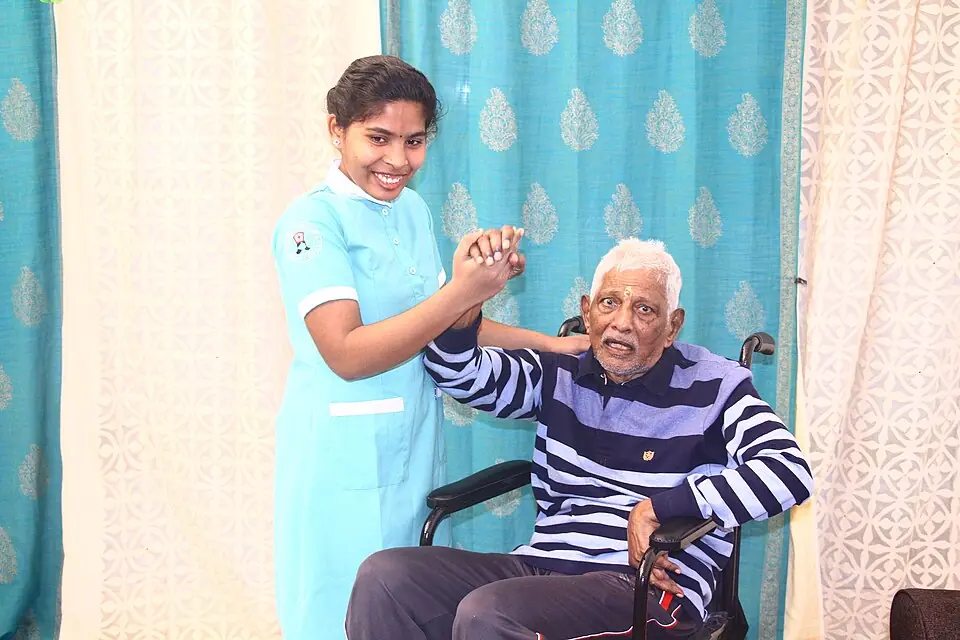
In Peshawar, the way most households find a nurse for a sick or elderly family member is still largely informal. A relative who works at a hospital knows someone. A friend whose father was ill last year passes on the number of the woman who sat with him. A neighbour recommends a "nurse" who has looked after patients in the area for years. A daily wage is agreed, a start time is set, and the person begins coming to the house, often with no paperwork at all. For many families in Hayatabad, the Cantt area, and the older parts of the city, this is simply how nursing help at home has always been arranged, and the informality of it feels faster and cheaper than approaching an agency.
The trouble is that home nursing is the one domestic role where getting the hiring wrong can carry consequences that no amount of goodwill can undo, and the informal route provides almost no protection against that.
The real risks of hiring a nurse informally in Peshawar
The problems families raise with us after trying the informal route for nursing are more serious than for almost any other role we place, because the work itself is more serious.
The first is qualification. The word "nurse" is used loosely in informal hiring, it can mean a qualified registered nurse or Lady Health Visitor, a nursing assistant, or simply someone who has sat with patients before and picked up some basic care. When a family hires through a friend's recommendation, they rarely see the actual qualification, and they have no way of knowing whether the certificate the person mentions is genuine, current, or relevant to the condition being cared for. For a patient recovering from surgery, on multiple medications, or living with a chronic condition like diabetes or hypertension, this gap is not a minor detail.
The second is identity and traceability. A nurse who arrives through a chain of personal contacts often has no verifiable CNIC on file with the household, and the address given is rarely checked. When a patient is vulnerable, alone with the nurse for long stretches, and often reliant on them for medication timing, the absence of a verified identity is a risk that families tend to think about only after something has already gone wrong.
The third is the reference itself. A recommendation from a relative sounds reassuring until you learn that the previous patient was in a very different condition, or that the arrangement ended because the family was dissatisfied, or that the "reference" is the nurse's own connection rather than an actual former employer. Informal references for nursing are almost never checked independently, and they are rarely specific to the kind of care your family member actually needs.
The fourth is the most uncomfortable one: what happens when the nurse simply isn't capable, and there is no one to call. The informal route has no replacement mechanism. If the nurse cannot handle a patient's medication schedule, or misreads a symptom, or simply stops coming after a week, the family is left scrambling, often patching together coverage with relatives who are not trained and who are already exhausted.
What a verified agency does differently
The core difference is not that an agency knows more nurses, it is that an agency does the work the informal chain skips entirely. For every nurse we place in Peshawar, four checks happen before the candidate ever meets a patient.
CNIC and address verification. We confirm the candidate's CNIC against her stated identity and verify the address she gives us. This is the baseline that makes a placement traceable, and it is the thing informal hiring almost never does properly for a role that involves being alone with a vulnerable person for long hours.
Nursing qualification verification. We verify the candidate's nursing qualification, confirming that the certificate is genuine and current, and that it is relevant to the kind of care the household needs. This is the single biggest gap in informal hiring, and it is the one that matters most for patient safety. A general nursing assistant is not the same as a qualified nurse, and a qualified nurse is not the same as one experienced in post-operative or geriatric care, and we screen accordingly.
Reference checks with previous employers. We contact the families and facilities a candidate has actually worked for, and we ask specific questions: what condition was the patient in, how did she handle medication and emergencies, why did the arrangement end, would you have her back. This is where the difference between "she looked after my father" and "she managed his insulin and wound dressing for three months without a single error" becomes visible.
An in-person interview. We meet the candidate and talk through the situations that actually come up in home nursing, how she would handle a sudden change in a patient's condition overnight, how she manages medication timing when the household routine is disrupted, how she communicates with a family when something is wrong. The interview separates someone who has genuinely nursed from someone who has only kept patients company.
None of these steps are dramatic in themselves. What they require is the time and the discipline to actually do them, which is precisely what the informal route does not provide for.
The replacement guarantee
Even with thorough screening, a nursing placement can turn out to be the wrong fit for a particular patient. A nurse who handled a post-surgical case well may not suit a household managing long-term elderly care, and a nurse used to a calm night routine may not be the right person for a patient whose condition is unstable and unpredictable.
This is where the replacement guarantee matters. If a placement does not work out, we go back to the shortlist and arrange a replacement rather than leaving the family to start the search over. The household does not re-interview a stream of strangers, does not re-verify qualifications, and does not pay a second round of agency effort to get a second candidate. The guarantee is not a sign that we expect placements to fail, it is there because home nursing is the one role where a wrong fit cannot simply be tolerated while the family sorts it out, the patient's safety does not allow for it.
The time an agency actually saves
When families tell us why they switched to an agency after trying the informal route, the reason they give most often is not safety, it is time, though the safety reason is usually close behind. The informal route sounds fast until you count the real cost: the days spent asking around, the candidate who agrees to come and then doesn't, the trial week that reveals she cannot handle the medication schedule, and then the whole process restarting from nothing while the patient is already in need of consistent care.
Through an agency, the same need is handled by a single conversation. A family tells us the patient's condition, the hours they need covered, whether they want live-in or live-out, and any specifics that matter, and we send a shortlist of candidates who have already cleared the checks above. The family meets the preferred candidate, confirms, and the placement begins. In most cases the shortlist is ready within 48 hours of the first message.
Getting started in Peshawar
The next step is straightforward. Message us on WhatsApp at our contact page with a few details: your area of Peshawar, the patient's condition and care needs, the hours you need covered, and whether you are looking for live-in or live-out. We follow up with a couple of clarifying questions and then send a shortlist of verified nurses. Families typically do a phone screen and then meet the preferred candidate in person before confirming, often with the patient's primary doctor's instructions on hand so the nurse understands the care plan from the first day.
If your Peshawar household also needs a caretaker for a more general companionship role, a maid or helper, or a driver for hospital visits, we can shortlist multiple roles at once so you are not running separate hiring processes. See our full Peshawar coverage for everything else we place in the city.
A verified nurse is not a luxury arrangement, it is simply the version of home nursing where the qualification was actually checked, the references were actually called, and there is someone to call if the first fit isn't right. For most Peshawar families who have tried both routes, that is the difference that ends up mattering more than any other.
Comments
Comments are reviewed before they appear.
Loading comments…