How to Verify a Caretaker Before You Hire in Karachi
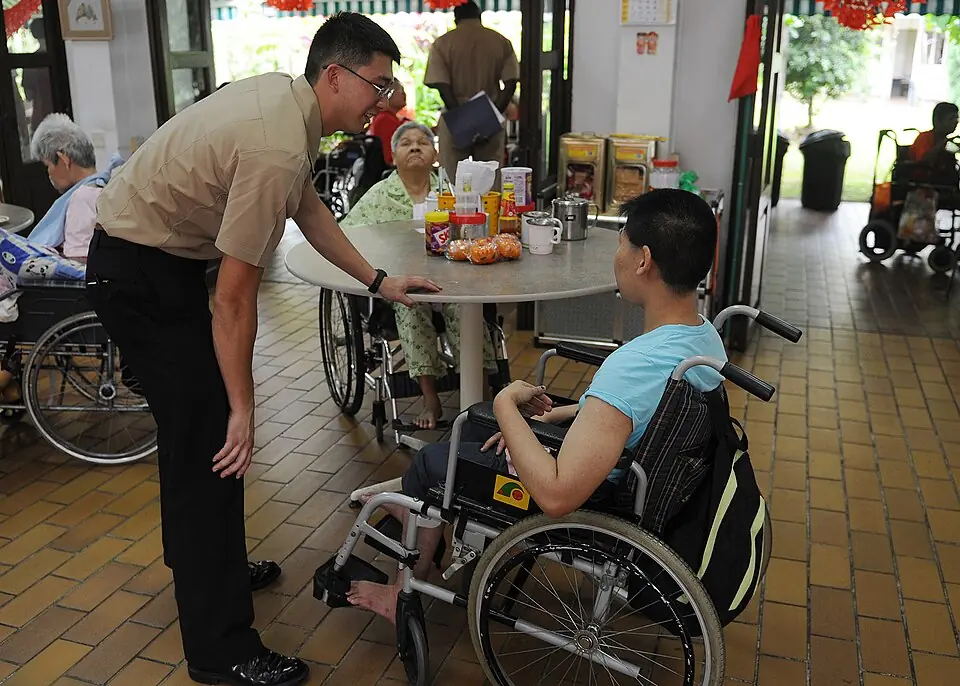
A caretaker is not like other domestic staff. They sit beside someone who cannot fully care for themselves, often through the night, often behind a closed bedroom door. In Karachi, where joint families are increasingly splitting into nuclear households and adult children are frequently working abroad or in other cities, the caretaker is frequently the only person physically present with an ageing parent for eight to ten hours a day. That is why verification is not a box to tick before hiring, it is the single most important part of the process, more important than salary negotiation, more important than experience on paper, more important than a polished interview. A cook who underperforms means a bad meal. A caretaker who is dishonest, unqualified, or simply not who they claim to be means a vulnerable person left alone with them.
Why verification matters more for caretakers than for any other role
Most domestic staff roles can be observed in real time. A driver is in the car with you. A cook is in the kitchen while you eat. A maid is moving through rooms you walk through. A caretaker, by contrast, works in the quietest corner of the house and is often trusted to act when no one else is watching. If an elderly parent is confused, cannot recall clearly, or is reluctant to complain, problems can go on for weeks before anyone notices. Karachi households that have been through a bad caretaker placement consistently tell us the same thing, the issue was never that the person was obviously wrong on day one, it was that small warning signs were missed or ignored at the hiring stage because the family was in a hurry.
RX Direct's verification steps for caretaker placements in Karachi
Every caretaker we place through RX Direct goes through four verification steps before we ever present them to a family. There is no skipping and no fast-tracking, even when a household is in genuine need and asking us to move quickly.
1. CNIC and address verification. We check the candidate's CNIC against the address they give us and confirm the document is genuine, not a copy that has been altered. We also confirm the permanent address on the CNIC matches where the candidate says their family is based, because a mismatch here is one of the most common signs of someone working under a false identity.
2. Reference checks with previous employers. We speak directly with at least two previous employers, ideally households where the caretaker looked after an elderly or dependent person, not just any domestic role. We ask specific questions, what the daily routine looked like, why the placement ended, whether they would hire the person again, and whether there was any concern around medication handling, money, or behaviour with the person being cared for.
3. In-person interview. We meet the candidate face to face in Karachi before shortlisting. This is where we assess how they communicate, how they respond to questions about difficult situations, and whether their stated experience actually matches what they can describe in detail. A person who has genuinely cared for a bedridden patient describes it differently than someone who has only heard about it secondhand.
4. Health screening. A caretaker in close daily contact with an elderly or immunocompromised person needs to be healthy themselves. We require a recent health screening, including a chest X-ray and basic bloodwork, before placement. This protects the person being cared for and gives the family one less thing to worry about.
Shortcuts families take that backfire
The most common shortcut we see in Karachi is hiring a caretaker through a neighbour's recommendation without doing any independent verification. A recommendation is a useful starting point, but it is not verification. The neighbour's needs, household, and the relative they were caring for may be completely different from yours, and a person who was suitable in one home can be entirely wrong in another. A recommendation should open the door to verification, not replace it.
The second shortcut is accepting a written reference letter at face value. Reference letters are easy to obtain, easy to write, and rarely challenged. Some are genuine, many are not, and the problem is you cannot tell which is which by reading the letter alone. We have seen candidates present impressive reference letters from households that, when we called, had never heard of them or had let them go over a serious issue that the letter conveniently did not mention.
The third shortcut, and the most dangerous, is skipping the CNIC check because the candidate seems trustworthy in person. Trustworthy demeanour is exactly what someone relying on a false identity is counting on. The families who end up with the worst outcomes are almost always the ones who decided the person "felt right" and therefore did not need to be checked.
How to verify a caretaker independently
If you are hiring on your own in Karachi, or if you want to double-check alongside our process, here is what we recommend.
Ask for the CNIC and photograph both sides. Cross-check the name, father's name, and date of birth against what the candidate has told you verbally. If anything does not match, that is the end of the conversation. Do not accept a photocopy alone, ask to see the original on the first in-person meeting.
Verify the address. Ask for a recent utility bill or a letter from a local mosque, union council, or community figure that confirms the candidate's stated address. This is not foolproof, but it adds a layer beyond the CNIC alone.
Call at least two previous employers yourself. Not the reference letter, the actual person. Ask them open questions rather than yes or no ones, so they have to describe rather than agree. "What was their daily routine like?" will tell you more than "Were they good?"
Meet the candidate more than once before confirming. A single interview is rarely enough for a role this sensitive. A second meeting, ideally at the home where they will work, gives you a sense of how they move around the space and how the person being cared for responds to them.
What documents to ask for
At minimum, ask for the candidate's original CNIC, two previous employer references with working phone numbers, a recent health screening report, and if the caretaker has any formal first-aid or nursing-related training, the certificate for that as well. Keep copies of the CNIC and the health report for your own records once hired. If the candidate is unwilling to provide any of these, treat that as the answer.
Why a phone call beats a written reference
A written reference tells you what someone was willing to put on paper. A phone call tells you what someone is willing to say when they have to think on their feet and you can hear their tone. When we call previous employers, the pause before an answer often tells us more than the answer itself. A hesitation when we ask "Would you hire them again?" is something no reference letter will ever show you. This is why we insist on phone-based reference checks rather than accepting letters, and why we recommend families do the same if they are verifying independently.
If a placement does not work out
Even with full verification, a caretaker can turn out to be a poor fit for a specific household, routine, or patient temperament. That is not a failure of verification, it is the reality of a role that depends heavily on personal compatibility. Every caretaker placement through RX Direct comes with a replacement guarantee, if the placement does not work out during the trial period, we go back to the shortlist and arrange a replacement rather than asking you to start the search over. The verification we did upfront is exactly what makes this possible, because we already have a pool of checked candidates to draw from instead of starting from zero.
Hiring a caretaker in Karachi
If you are looking for a verified caretaker for a parent or dependent relative in Karachi, message us on WhatsApp with a brief outline of the situation, the area of Karachi you are in, whether you need live-in or live-out, and the general hours. We will follow up with a few questions and send a shortlist of candidates who have already been through CNIC verification, reference checks, in-person interview, and health screening. You can also see our full Karachi coverage for other domestic staff roles we place in the city, and our caretakers service page for more on how we handle this placement specifically.
Verification takes a little longer than hiring on instinct. In our experience, the families who take that extra time at the start are the ones who do not have to start over three months in.
Comments
Comments are reviewed before they appear.
Loading comments…