Live-In vs Live-Out Nurse: Which Is Right for Your Rawalpindi Home
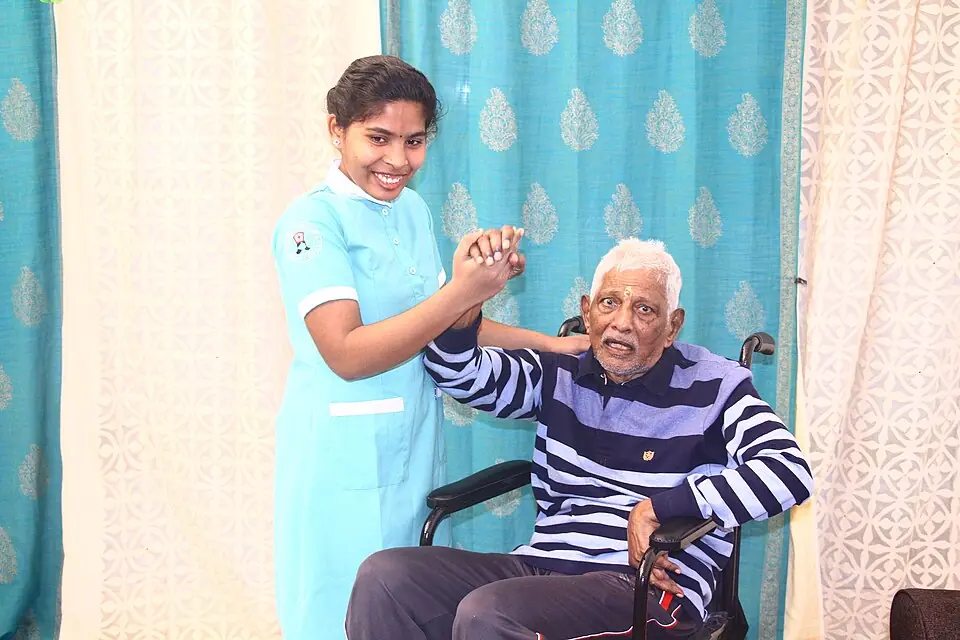
Deciding between a live-in and a live-out nurse is a choice that affects not just the patient's daily care but the entire household's routine, and in a city like Rawalpindi it carries extra weight. Households in Cantt, Saddar, Chaklala, Askari, Bahria Town and DHA bring in nursing support for genuinely different reasons: a parent discharged from CMH or Holy Family Hospital, an elderly mother who needs insulin and blood pressure monitoring, a post-stroke family member requiring overnight supervision. Whether that nurse lives in or comes on a fixed shift changes what the family can realistically rely on.
The live-in versus live-out question for a nurse is rarely about preference alone. It is about the patient's condition, how unpredictable the care needs are, whether the household can accommodate someone full time, and how much of the burden the family is carrying on its own. This is a practical comparison of the two arrangements and how to tell which one fits your Rawalpindi home.
What a live-in nurse means in a Rawalpindi household
A live-in nurse resides in the home for the duration of the placement, which for nursing usually means a separate room close to the patient, meals provided, and a working pattern that covers the core day with an understanding about night calls. It is not literally around-the-clock continuous work, but the nurse is physically present and available for the patient's needs across the day and for overnight situations such as a fall, a sudden spike in blood pressure, or a restless post-surgery night.
The advantage is continuity and immediacy. For an elderly parent with a chronic condition, a patient in the early weeks after discharge, or a post-stroke case where nights are genuinely uncertain, having a qualified nurse on site means medication is given on time, vitals are checked when something feels off rather than at the next scheduled visit, and the family is not waking up to manage a crisis alone. In Rawalpindi's winter, when elderly patients with respiratory and cardiac issues tend to deteriorate quickly, that presence can be the difference between a stable night and a hospital readmission.
The trade-off is the same as any live-in role, space and privacy, with the added weight that the nurse needs to be close to the patient rather than just somewhere in the house. For Cantt and Askari households the entry documentation for live-in staff also needs to be sorted in advance, because military-area security treats a resident staff member differently from a daily visitor.
What a live-out nurse looks like instead
A live-out nurse comes to the home on a fixed shift and leaves at the end of it. The most common live-out patterns we place in Rawalpindi are a day-shift nurse from morning to evening, a dedicated night nurse for households where an elderly member needs overnight monitoring but the family can manage the day, and a twice-daily visit for a patient who needs skilled care at specific points such as morning medication and evening wound dressing rather than continuous presence.
The strength of live-out is boundary clarity and sustainability. A nurse who works her shift and goes home to rest is sharper on her next shift than one stretched across long live-in days, and for families that can cover parts of the day themselves, a fixed shift is often the more reliable structure over weeks and months. It also keeps the household's privacy and avoids the accommodation question, which matters in Rawalpindi's denser residential areas where a separate room near the patient is not always available.
The trade-off is coverage gaps. Between shifts the family is the fallback, and if the patient's condition is unpredictable, that gap can be stressful. A live-out nurse also cannot respond to a late-night crisis, which is why households with unstable patients tend to move toward live-in or to a day and night shift pairing.
Which Rawalpindi household tends to suit which
From the bookings we handle across Rawalpindi, the pattern is fairly clear.
Live-in suits a household with an elderly parent whose condition is unstable or deteriorating, a family managing early post-discharge recovery where the first weeks are the riskiest, or a post-stroke or cardiac patient where nights are genuinely uncertain. It also suits families where the primary caregivers are themselves stretched and cannot reliably cover the gaps between shifts.
Live-out suits a household where the patient is stable enough that skilled care is needed at specific points rather than continuously, where the family can cover parts of the day, where a separate room for a live-in nurse is not available, or where a dedicated night nurse is the actual need and the day is managed by the family.
The mismatch we see most often is a family with a genuinely unstable patient booking a day-shift live-out nurse and then finding themselves managing every night alone, or a stable patient household taking a live-in nurse when a twice-daily visit would have covered the need at far less disruption.
How we screen differently for live-in and live-out
The baseline verification is the same for both, because every nurse we place in Rawalpindi goes through CNIC and address verification, nursing qualification verification, reference checks with previous employers, and an in-person interview. What changes is what we probe within those steps.
For a live-in nurse we look harder at endurance and household fit during the interview. We ask about previous live-in nursing roles, how the candidate has managed the intensity of being on call across long days, how she handles the boundary between her rest time and the patient's needs, and whether she is comfortable in joint-family or military-area households where the domestic dynamic is more complex. We also confirm she has a stable home to return to on her off days, because a live-in nursing placement only holds up when the candidate genuinely recovers between stretches.
For a live-out nurse we focus more on shift reliability and the specific care match. We check where she lives against your area, because a nurse commuting across Rawalpindi in peak traffic before a night shift is a placement at risk of lateness and attrition, and we confirm her previous shift experience matches the care involved, whether that is wound care, insulin management, mobility assistance, or post-stroke monitoring, before we send the profile. For Cantt and Askari placements we also brief live-out candidates on the gate documentation so the first shift is not lost at entry.
Questions to ask yourself before deciding
A few honest questions will usually make the choice clear before you message us.
- How unpredictable is the patient's condition? Unstable or deteriorating conditions lean toward live-in. Stable conditions with specific care points lean toward live-out.
- What are the actual night needs? If overnight monitoring or crisis response matters, live-in or a dedicated night nurse is the realistic choice. If nights are calm, live-out covers it.
- Can the family cover the gaps between shifts? If yes, live-out is workable. If the family is already stretched, live-in takes the pressure off.
- Do you have a separate room near the patient? Live-in nursing needs the nurse close to the patient, not just somewhere in the house. If you do not have that space, live-out is the practical answer.
- Is the patient comfortable with a constant presence? Some elderly patients prefer a familiar face through the day and their own space at night. Others are reassured by a nurse being there.
- Are you in a Cantt or Askari area? Entry documentation for live-in staff in military areas is stricter, so factor that into the timing rather than discovering it on day one.
What happens after you decide
Once you have a rough sense of which option fits, message us on WhatsApp with the situation: a parent discharged from CMH, an elderly mother who needs insulin, a post-surgery recovery, the area, and whether you are leaning live-in or live-out. We follow up with questions about the specific medical needs, whether it is day, night, or full cover, and whether the household can provide a separate room. Then we send two or three verified nurse profiles within 48 hours, with qualifications and relevant experience noted, matched to the arrangement you actually want rather than a generic profile.
Every placement starts with a working trial, because the first few days are where the fit shows, whether the nurse's style suits the family, whether the patient is comfortable, and whether the routine works in the home. If something is not right, tell us early and we shortlist a replacement rather than waiting out a mismatch, because the patient's comfort is the priority.
If your family also needs a caretaker for a parent who does not need medical nursing but does need daily support, or a maid or helper to manage household chores while the family focuses on care, we can shortlist multiple roles together. See our full Rawalpindi coverage for everything else we place in the city.
Message us on WhatsApp with your Rawalpindi nursing requirements, and tell us whether you are considering live-in or live-out, we typically shortlist verified nurses within 48 hours.
Comments
Comments are reviewed before they appear.
Loading comments…