Nurse Interview Checklist: What to Ask Before Hiring in Karachi
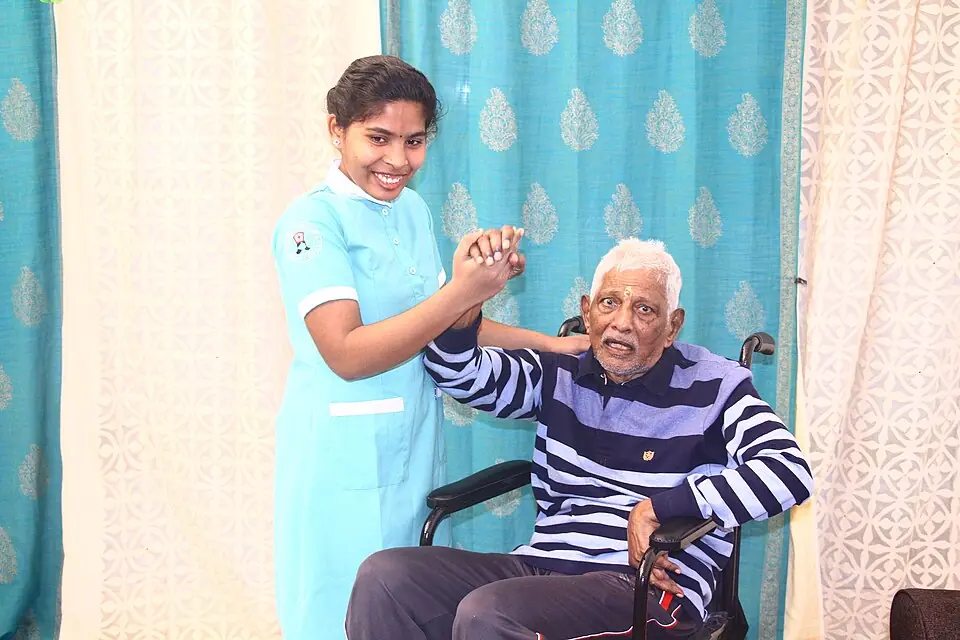
A home nurse is the one domestic hire whose mistakes do not show up as a burnt meal or an untidy lawn, they show up as a missed dose, an infected wound, or a patient who deteriorates overnight without anyone noticing. A nurse also works with a family member who is often too unwell, too elderly, or too confused to advocate for themselves, which means the interview is not just about whether the candidate is qualified on paper, it is about whether you can trust her judgement in a room when no one else is watching. In Karachi, where families book nurses after a discharge from Aga Khan, South City, or Liaquat National, or for elderly parents in Clifton, DHA, PECHS, and Gulshan facing the city's brutal summer heat, the interview has to cover both clinical competence and the practical realities of a placement in this city.
This is the checklist we use during our in-person interview for every nurse we shortlist for a Karachi placement. You can use the same questions when you meet a candidate yourself, and the notes below explain what each one is actually testing for.
The interview questions we ask every nurse
1. "Where did you train, and what is your registration number?"
Why it matters: nursing qualification verification is the first check we run, but the question itself tells you how a candidate responds to being asked for proof. A qualified nurse states her institution and registration without hesitation. Someone who hedges, says the documents are "with a relative", or becomes defensive is a serious concern regardless of how confident the rest of her answers sound.
A good answer is immediate and specific. A weak answer is evasion, or a school name that does not match a recognisable nursing programme.
2. "What kind of patients have you cared for most recently, and what were the actual tasks?"
Why it matters: nursing covers a wide range, and a nurse whose recent experience is ward observation is not the same as one who has independently managed wound care, insulin, and vitals in a home setting. The question separates hands-on home nursing from more general hospital experience.
A good answer names the patient type, the condition, and the specific tasks, such as "an elderly diabetic patient, I managed insulin and daily wound dressing for six weeks." A weak answer is "all kinds of patients", with no detail on condition or task.
3. "Walk me through how you would handle a medication error, if one happened."
Why it matters: this question is less about whether errors happen and more about honesty and process. A nurse who says errors never happen is either inexperienced or dishonest. What you want to hear is that she would tell you immediately, document it, and seek medical guidance rather than hide it.
A good answer acknowledges the possibility, prioritises informing the family and seeking guidance, and does not try to cover it up. A red flag is any answer that minimises the risk or suggests she would wait to see if the patient was fine before saying anything.
4. "How do you manage a patient who refuses medication or gets agitated?"
Why it matters: elderly patients, especially post-stroke or with early dementia, often refuse care or become upset. A nurse who forces or ignores is unsafe, and one who simply gives up leaves the patient untreated.
A good answer shows patience, reassurance, and a willingness to involve the family rather than forcing or abandoning the dose. A weak answer is "I make them take it", or "I leave it and tell no one", both of which are dangerous in different ways.
5. "What would you do if the patient's condition suddenly changed overnight and you were on a night shift alone?"
Why it matters: night nurses are often the only person awake when something goes wrong. You need to know she will act rather than wait for the morning.
A good answer: check vitals, stabilise as far as she can, call the family immediately, and arrange emergency help if needed. A weak answer is "I would wait for the family in the morning", which can be the difference between a recovery and a crisis.
6. "How do you handle hydration and heat risk for an elderly patient in a Karachi summer?"
Why it matters: this is a Karachi-specific question that matters more than most families realise. From May through August, elderly patients face dehydration, heat exhaustion, and respiratory issues aggravated by humidity, and a nurse who treats summer like any other season will miss the early signs.
A good answer mentions scheduled fluid intake, watching for confusion or low urine output as dehydration signs, and managing indoor cooling. A weak answer has no heat-specific awareness and treats it as a general care question.
7. "Can you give me the number of a previous employer or hospital supervisor, and may I call them?"
Why it matters: for nursing more than almost any other role, a reachable reference from a previous employer is essential, because the stakes of a wrong hire are higher.
A good answer is immediate, with the name of the supervisor or family and roughly when she worked there. A weak answer is reluctance, or a reference who turns out to be a relative.
8. "What hours can you realistically sustain, and how do you get home after a night shift in Karachi?"
Why it matters: reliability and safety both matter here. A nurse worn out by a long commute across Karachi is less alert on shift, and a late-night commute in this city needs to be planned with safety in mind.
A good answer is honest about the commute and the hours she can sustain. A weak answer overpromises, "I can do 24 hours, any days", which rarely holds and puts the patient at risk when it breaks down.
How our interview differs from doing it yourself
Before the interview we have already completed CNIC and address verification, and nursing qualification verification, so the question of whether a candidate is actually a qualified nurse is settled before she walks in. We conduct reference checks with previous employers, calling them directly rather than accepting a forwarded number. Our in-person interview is held face to face, not over a phone screen, because clinical confidence and bedside manner are easier to read in person. We also confirm the candidate is comfortable with the specific care involved in your booking, whether that is wound care, mobility assistance, insulin management, or overnight monitoring, before we send the profile. For apartment-based placements in Clifton and DHA high-rises, we brief candidates on building service-lift and security procedures, since many towers restrict domestic staff entry to specific hours and a nurse who arrives without that sorted can lose the first shift at the lobby.
By the time a nurse reaches your shortlist, the question of qualification and identity is already answered, and the interview you do with her is about fit with your specific patient and household rather than basic screening from zero.
Red flags to watch for during a nurse interview
- Hesitation or defensiveness when asked for a registration number or training details.
- Vagueness about recent patients, conditions, or the actual tasks performed.
- Claiming medication errors never happen, or suggesting she would wait before telling the family.
- Forcing or abandoning care when a patient refuses medication.
- No plan for an overnight change in condition beyond "wait for the morning".
- No Karachi-specific awareness of heat and dehydration risk for elderly patients.
- Reluctance to share a reachable reference, or a reference who turns out to be family.
- Overpromising on hours, especially "24 hours, any days".
None of these is an automatic no on its own, but in nursing the threshold for concern should be lower than for other roles, because the cost of a wrong hire is higher.
Trial period and the replacement guarantee
The first few days of a nursing placement are where the fit shows, whether the nurse's style suits the family, whether the patient is comfortable with her, and whether the routine works in the home. We treat that early period as a working trial, and if something is not right, tell us as soon as possible rather than waiting it out. It is far easier for us to shortlist a replacement quickly than to fix a mismatch after weeks, and the patient's comfort is the priority. The replacement guarantee is built into how we work, not an add-on, and the trial exists to catch mismatches early when they are still straightforward to resolve.
How a typical Karachi booking works
A WhatsApp message usually starts with the situation, a parent discharged from Aga Khan, an elderly father who needs insulin help, a post-surgery recovery at home, and the area, Clifton, DHA, PECHS, Gulshan, or North Nazimabad. We follow up with questions about the specific medical needs, whether it is day, night, or 24-hour coverage, and whether the household can provide a separate room for a live-in nurse. Then we send two or three verified nurse profiles within 48 hours, with qualifications and relevant experience noted. For apartment bookings in Clifton and DHA towers we confirm the building's service-lift and entry procedures in advance so the nurse does not lose the first shift at the lobby. For longer placements we also ask about language preference, since many Karachi households are specific about whether they want an Urdu or English-speaking nurse, particularly for elderly patients who are most comfortable in one language.
Beyond nurses
If your family also needs a caretaker for a parent who does not need medical nursing but does need daily support and company, or a maid or helper to handle household chores while the family focuses on care, we can shortlist multiple roles together. See our full Karachi coverage for everything else we place in the city.
Message us on WhatsApp with your Karachi nursing requirements, we typically shortlist verified nurses within 48 hours.
Comments
Comments are reviewed before they appear.
Loading comments…