Live-In vs Live-Out Domestic Couple: Which Is Right for Your Karachi Home
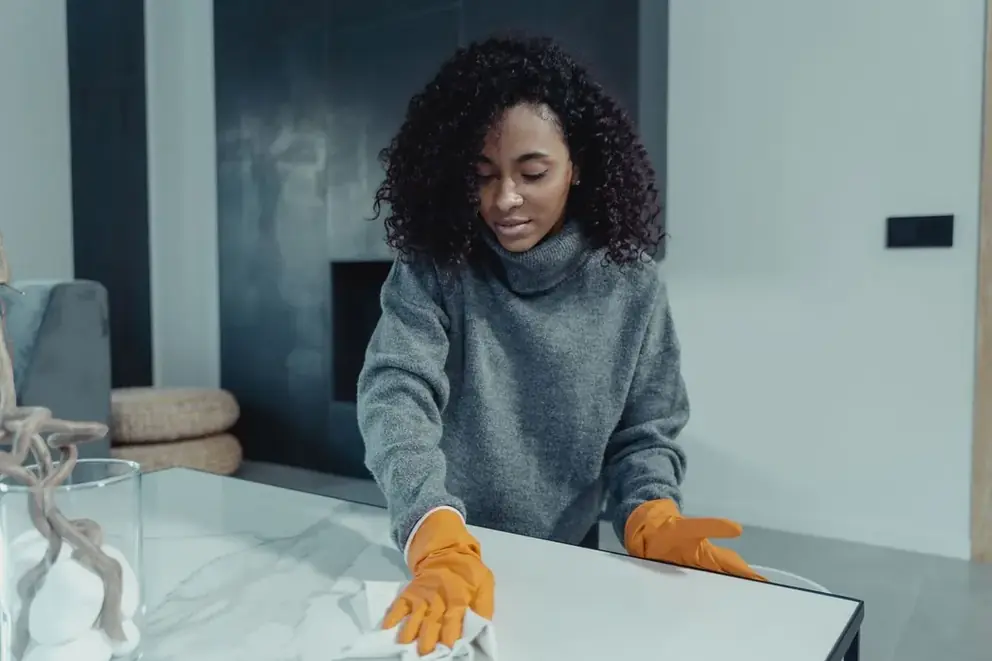
The choice between a live-in and a live-out domestic couple is one of those decisions that quietly reorganizes an entire Karachi household. A couple who lives in becomes a near permanent part of the home's daily machinery, present at fajr to start the kitchen, around through the afternoon lull, and still there when the family returns late from a dinner in Clifton. A couple who comes in on a fixed schedule arrives, gets the work done, and leaves, taking the boundaries of an ordinary job with them. For Karachi families, where the difference between a calm house and a chaotic one often comes down to who is actually running it, this single choice shapes everything from how meals land on time to how much of your home life stays private.
What a live-in domestic couple looks like in Karachi
A live-in domestic couple, typically a husband and wife who work as a team, sleeps in your house and divides the household work between them across the day. The most common split is one handling the kitchen and cooking while the other manages cleaning, laundry, and household errands, and in some setups one of them also drives. Because they are resident, their hours flex with the household's rhythm rather than snapping to a fixed shift, breakfast is ready when the family wakes, the house is turned down at night, and if a guest drops in unannounced on a Sunday there is someone present to receive them.
In Karachi's larger homes, particularly in DHA, Clifton, and the Bahria developments, a live-in couple usually gets a servant quarter on the roof or a small attached room with a separate bathroom. The expectation is that they are broadly available, with agreed rest periods in the afternoon and a proper night's sleep, rather than on call every waking minute. The privacy calculation is real and worth naming, a couple living in your home will be present during the parts of the day that are not curated for visitors, and they will see the household as it actually runs. Some families find this easy and build genuine trust over months. Others find it constraining and never quite relax.
What a live-out domestic couple looks like
A live-out domestic couple arrives on a fixed schedule, usually a daytime shift of around eight to ten hours, and leaves for their own home in the evening. Within those hours they can run the household to the same standard as a live-in couple, meals prepped, house cleaned, laundry cycled through, errands done. What they do not provide is overnight presence, so anything that happens after they leave, a late dinner to plate, a child who wakes unwell, a burst pipe at night, falls back on the family.
The upside is cleaner boundaries. Your home reverts to being purely yours after hours, and the couple's own life, their children, their meals, their rest, happens in their own space rather than in a corner of yours. The trade-off is the Karachi commute. A couple coming in from Malir to work in DHA Phase 6 is at the mercy of Sharea Faisal every morning, and the city's traffic, water tanker chaos, and sudden road closures can turn a predictable shift into a late one. We try to match live-out couples who already live within a reasonable distance, because a couple with a punishing commute will, within a few months, become a couple looking for a closer placement.
Where each one fits
A live-in domestic couple suits the large Karachi household where the owners travel frequently, a house that should not sit empty, or a joint family where the kitchen and cleaning load is genuinely too much for one person. It also fits homes that host often, since a resident couple can scale up for a dawat without anyone having to arrange last minute help. The hard requirement is space, a live-in couple needs a proper room of their own, and trying to squeeze them into a shared corner with other staff almost always ends in friction.
A live-out couple suits the household that wants a well run home during the day and full privacy at night, where the owners are home by evening and happy to handle anything minor that comes up after hours, and where a clear professional arrangement feels more comfortable than having staff resident. It also suits apartments and smaller houses in areas like Clifton and Bath Island where there simply is no servant quarter to offer.
How we screen differently for each
Every domestic couple we place goes through the same baseline, CNIC and address verification for both individuals, reference checks with previous employers, a joint interview, and health screening for both. The joint interview is the part that catches problems a one on one interview misses, it shows how the couple communicates under pressure, whether they have a clear division of work between them, and whether one of them is doing most of the talking while the other seems unsure. We have turned down couples who interviewed fine individually but clearly did not work as a team once they were in the room together.
For a live-in placement we go further on stability and household fit, looking for couples who have stayed together in a previous household for a year or more, and asking directly about how they handle living in someone else's home, sharing a small room, and being present during a family's private hours. We also confirm where their own children, if any, are living and who cares for them, because a couple worried about children left elsewhere does not settle well. For a live-out placement the extra screening focuses on commute and punctuality, where the couple lives, how they travel, and what previous employers say about whether they arrived on time and held the shift reliably.
The replacement guarantee covers both arrangements. If the fit is wrong during the trial, a personality clash, a commute that turns out to be unsustainable, or a division of work that does not match what the household needs, we go back to the shortlist and arrange a replacement rather than making you restart.
Questions to ask before you decide
- Do you need overnight presence in the house? If the home should never be empty at night or someone needs help after hours, live-in is the answer.
- Is there a proper separate room for a couple? A couple needs their own space, not a shared corner. Without it, live-in will not work.
- How often do you host? Frequent guests and dawats lean toward live-in, since a resident couple absorbs the extra work without notice.
- How much privacy do you want after hours? If the idea of staff being present in the evening feels stifling, live-out is the better fit.
- Where would a live-out couple travel from? A long Karachi commute erodes reliability fast. If your area is hard to reach, live-in may actually be more dependable.
- What is the real monthly budget? Live-in costs more in total salary but covers far more hours, while live-out is cheaper but leaves the evening and night to you.
If your Karachi home also needs a driver, a security guard, or a gardener on top of a domestic couple, we can shortlist several roles together. See the full range of staff we place across the city on our Karachi coverage page.
Ready to choose? Message us on WhatsApp with your area, the size of the household, and whether you are leaning live-in or live-out, and we will send verified couple profiles within 48 hours.
Comments
Comments are reviewed before they appear.
Loading comments…